Builds Confidence & Emotional Resilience
Activities that encourage self-confidence and emotional resilience.
People. Horses. Healing. Hope. A place where different experiences can build stronger people—and where the entire community can find connection and purpose.
Explore the Vision ↓See What We're Doing Now →A visual concept of the planned center, including a year-round indoor riding arena. Illustrations represent our vision, not completed facilities.
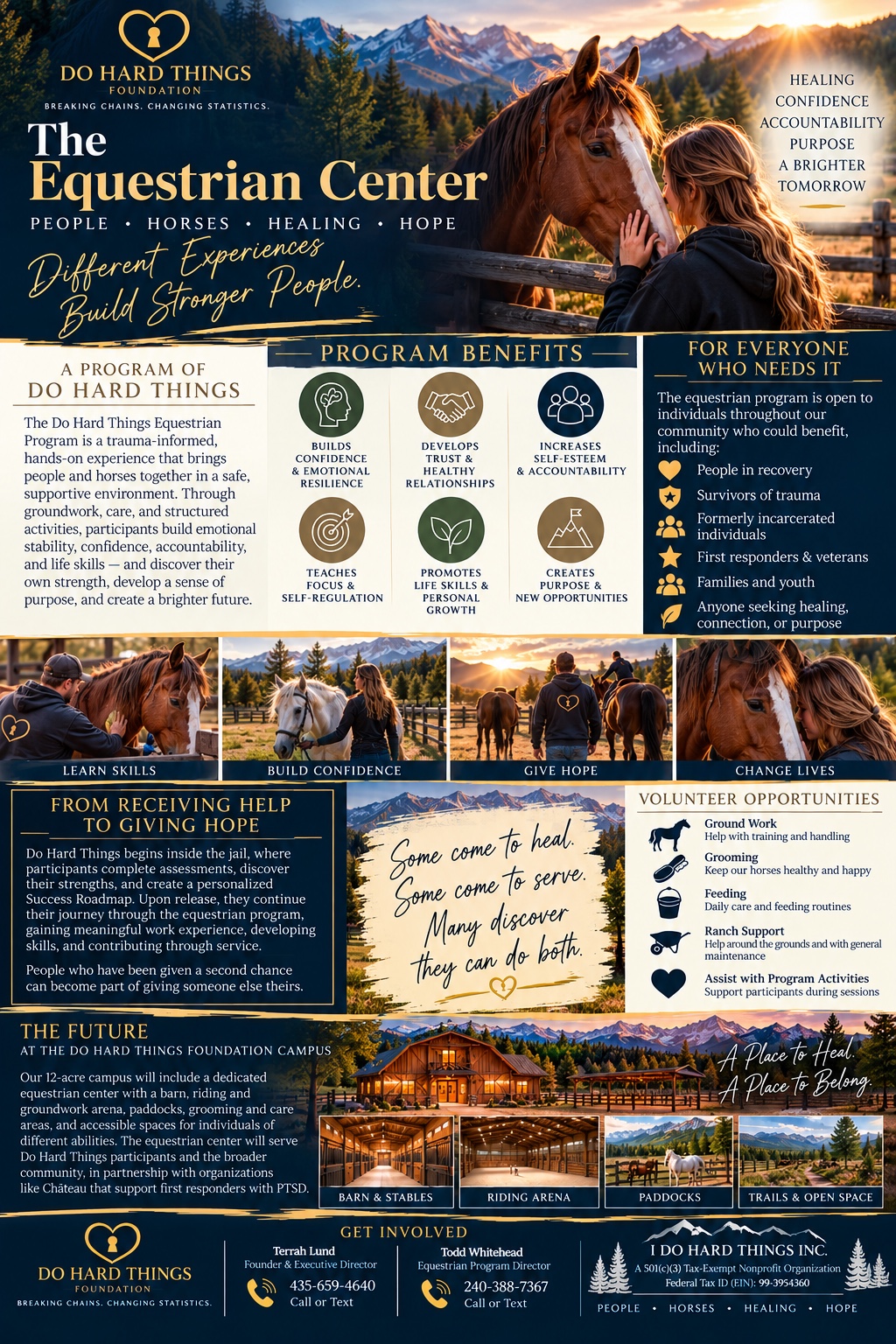
The Do Hard Things Equestrian Program is a trauma-informed, hands-on experience that brings people and horses together in a safe, supportive environment. Through groundwork, care, and structured activities, participants can build emotional stability, confidence, accountability, and life skills—and discover their own strength, develop a sense of purpose, and create a brighter future.
Activities that encourage self-confidence and emotional resilience.
Supportive experiences centered on patience, trust, and connection.
Responsibility, follow-through, and confidence through caring for horses.
Groundwork and structured routines that encourage focus and self-awareness.
Communication, teamwork, goal setting, and practical life skills.
Service and meaningful connections that may open doors to new possibilities.
LEARN SKILLS · BUILD CONFIDENCE · GIVE HOPE · CHANGE LIVES
We envision a trauma-informed equestrian center within the future Do Hard Things Foundation campus, where people and horses connect through groundwork, care, service, and structured learning. The center would bring together participants, volunteers, and community partners in a supportive environment.
Our aim is to create opportunities to build confidence, emotional resilience, healthy relationships, accountability, focus, life skills, and a renewed sense of purpose. These are intended benefits, not guaranteed outcomes.
Spaces for horse care, daily routines, learning, and stewardship.
A planned enclosed, accessible riding arena for year-round groundwork, horsemanship, and supervised activities through Utah winters.
An outdoor arena for seasonal riding and groundwork, plus paddocks and horse-care areas.
Peaceful natural surroundings, with accessibility considered as the campus plan develops.
Our vision includes a dedicated equestrian center with a barn, riding and groundwork arenas, paddocks, grooming and care areas, and accessible spaces for individuals of different abilities. The center would serve Do Hard Things participants and the broader community, including through potential partnerships with organizations such as Château that support first responders with PTSD.
Housing, care, and training for horses.
Year-round riding, groundwork, and structured activities, regardless of weather.
Groundwork, riding, and equestrian activities in the open air.
Safe, spacious turnout areas.
Access to nature and beautiful surroundings.
Spaces designed to welcome people of different abilities.
These are proposed campus features. The final acreage, design, services, and partnerships remain subject to planning and resources.
Although Do Hard Things began with reentry, the future equestrian center is envisioned for a broader community, including:
Participation and specialized services would depend on qualified partners, safety requirements, accessibility, staffing, and available resources.
Do Hard Things begins inside the jail, helping participants discover their strengths and create a personal roadmap. Our future equestrian center would offer one possible way to continue that journey through meaningful service, mentorship, practical skills, and community connections.
Volunteer opportunities could include supervised groundwork, grooming, feeding, ranch upkeep, and helping with activities. We also hope to collaborate with organizations serving first responders and others affected by trauma.
Do Hard Things begins inside the jail, where participants complete assessments, discover their strengths, and create a personalized Success Roadmap. Upon release, the equestrian program could help them continue their journey, gaining meaningful work experience, developing skills, and contributing through service.
People who have been given a second chance can become part of giving someone else theirs.
Help with training and handling.
Keep horses healthy and happy.
Daily care and feeding routines.
Help around the grounds and with general maintenance.
Support participants during sessions.
All opportunities would depend on program availability, supervision, and safety requirements.